Oyo's gods crossed in slave ships and became Candomblé (c. 1830)
How the collapse of Oyo filled Salvador with Yoruba-speaking captives, and how freed Nagô women and men gathered the gods of many towns into one house
In the early 1830s a freed Nagô woman bearing an Oyo palace title ran a Xangô temple in Salvador. Her founding journey to Africa was a deportation; 1.2 million Africans had landed in Bahia before her.

Before: Bahia's Africans and the gods of many towns (c. 1700–1800)
In the 1790s Salvador da Bahia, on the Bay of All Saints, was one of the great cities of Portugal's empire and one of the largest slave ports in the Atlantic world. It had been the capital of Brazil from its foundation in 1549 until 1763, and its wealth still came from the sugar mills and tobacco farms of the Recôncavo, the fertile crescent of land around the bay 1. According to the estimates of the Trans-Atlantic Slave Trade Database, 1,347,121 Africans were embarked for Bahia between 1514 and 1866 and 1,213,691 were landed alive. Only the region of Rio de Janeiro received more, and the difference between those two figures, about 133,000 people, is the number who died at sea on the way 1. By the end of the eighteenth century Africans and their descendants, enslaved and free, made up the large majority of the city's inhabitants. They carried the city's goods on poles, sold food in its streets, worked its docks, crewed its slave ships, and filled the Recôncavo's cane fields.
Bahia's trade with Africa had a peculiarity that shaped everything in this record. From the late seventeenth century Bahian merchants exchanged a low-grade tobacco, twisted into rolls and cured in molasses, for captives on the Costa da Mina, the stretch of West African coast the English called the Slave Coast and historians call the Bight of Benin. Pierre Verger's Flux et reflux (1968), the founding study of the route, showed that Bahia and the ports of Ouidah, Porto-Novo, Badagry and Lagos formed a direct bilateral circuit that bypassed Lisbon, and that the traffic ran both ways: ships, letters, cloth, kola, and eventually people returned 2. The captives of that circuit, in Bahia, were called Mina.
Calundu, brotherhoods and nations
Before there was a Candomblé there were calundus. The word, from Kimbundu, appears in colonial Inquisition files and in the satirical verse of Gregório de Matos in the late seventeenth century for African rites of healing, divination and spirit possession. Laura de Mello e Souza's O Diabo e a Terra de Santa Cruz (1986) reconstructed them from Inquisition denunciations: the best documented is Luzia Pinta, an Angolan freedwoman denounced as a witch near Sabará in Minas Gerais in 1739, shipped to Lisbon in 1742, imprisoned by the Holy Office and banished after an auto-da-fé 3. Calundu was, in Luis Nicolau Parés's characterisation, a "more individualised and itinerant" practice: a healer with clients rather than a congregation with a temple 4.
Africans in Bahia had other institutions. The Catholic lay brotherhoods (irmandades) — Nossa Senhora do Rosário dos Pretos above all — organised burials, processions and mutual aid along lines of colour and African origin. Work gangs (cantos) of porters and carriers were organised by origin too. Out of the brotherhoods, the cantos and the ships came the colonial nações, "nations": Angola, Jeje, Mina, Hausa, and later Nagô. These were not peoples that had existed in Africa so much as categories made in the slave trade and then inhabited. Castillo and Parés describe Nagô as "an umbrella term" that gathered people from different regions "who did not necessarily consider themselves the same ethnic group" 5. Parés calls the brotherhoods, gangs and early candomblés the "spaces of sociability" in which those identities were worked out 4.
What eighteenth-century Bahia did not yet have was a Yoruba majority. The Mina captives of the 1700s were mainly Gbe speakers from the kingdoms of Allada, Hueda and Dahomey, called Jeje in Bahia; Parés traces the Jeje presence "since the early eighteenth century" and argues that it was their vodun cults that provided Bahia with its first model of an "ecclesial or conventual" religious group, with initiation and fixed altars 4. That is the calibration for what follows: when the Yoruba-speaking captives arrived, they entered a city where the institutional form of an African temple already existed.
- Calundu (17th–18th centuries): individual healing and divination, often Central African in vocabulary, prosecuted by the Inquisition 3.
- Brotherhoods (irmandades): Catholic, legal, organised by colour and nation; the public face of African Bahia.
- Nations (nações): Angola, Jeje, Mina, Hausa, Nagô — trade categories that became social identities 5.
- Jeje vodun houses (18th century onward): the first conventual African temples, with initiates and permanent shrines 4.
Across the ocean: one orisa, one town
On the other side of the circuit, in the forest and savanna west of the lower Niger, lived the people who in the nineteenth century would come to be called Yoruba. They did not yet call themselves that. "Yoruba" was a Hausa name for the people of Oyo, and its extension to all speakers of the language was the work, largely, of the nineteenth century: of Christian missionaries, of freed returnees in Sierra Leone and Lagos, and of the Anglican clergy who wrote its first grammars, as J. D. Y. Peel's Religious Encounter and the Making of the Yoruba (2000) has shown 6. In the eighteenth century the people of Oyo, Ketu, Ijebu, Egba, Ife and Ijesa were subjects of different kings, with different dialects, and with different gods.
The gods were the orisa, and each was rooted in a place. Sango, god of thunder, was the deified fourth king of Oyo; Samuel Johnson's History of the Yorubas, finished in 1897 by a Yoruba Anglican pastor and published in 1921, records that Sango was "deified by his friends after his death" and that his emblems were stone axe-heads, "thunder bolts" 7. Osun belonged to the river and the town of Osogbo; Osoosi, the hunter, to the kingdom of Ketu, whose royal grounds were consecrated to him 8; Yemoja to the Ogun river and the Egba; Obatala to Ile-Ife. A town might have dozens of cults, but each cult had its own priests, its own lineages of devotees, and its own festivals, and a person was born into, or called to, one of them. Karin Barber's classic essay "How Man Makes God in West Africa" (1981) argued that an orisa's greatness in a town depended on the size and devotion of its following: a god neglected by its people shrank 9.
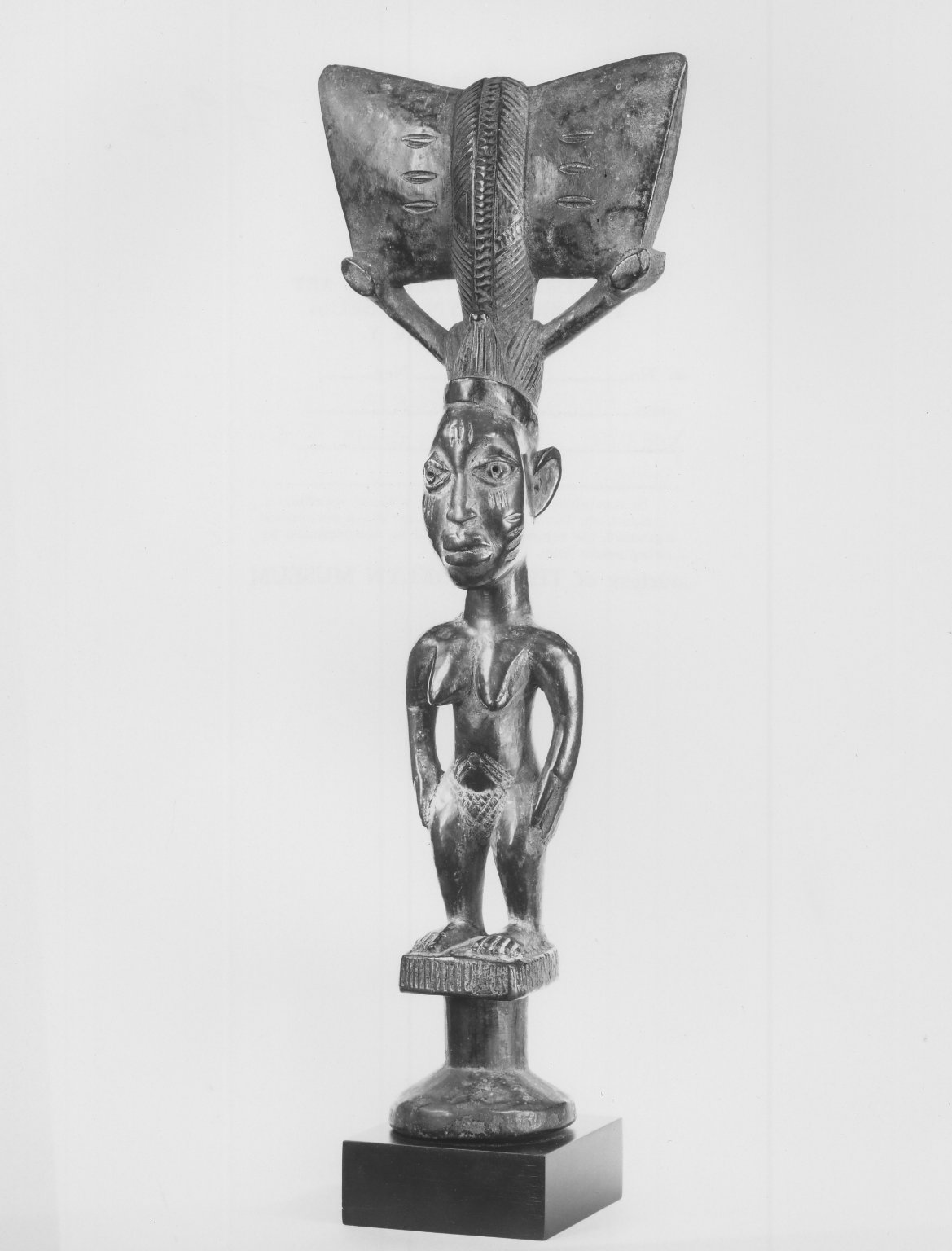
Above the cults sat Ifa, the divination system of the babalawo, whose sixteen principal figures and 256 combinations told a client which orisa to propitiate and how; Johnson records that Ifa worship "was officially recognized by King Ofiran" of Oyo 7. Alongside them stood the ancestral masquerades of Egungun and the earth cult of Ogboni, which in many towns acted as a check on the king. And above all of these, in Oyo, stood the palace. The Alaafin, Oyo's king, ruled with a council of chiefs, the Oyo Mesi, and a cavalry army that made Oyo the dominant power between the Niger and the coast from the seventeenth century, a power that Robin Law dates at its height, as a slave-trading state, to the 1780s 10. The Sango cult was a cult of the Oyo state. Its high priestess was a palace woman.
The transmission: Oyo's collapse and the Nagô in Salvador (1789–1850)
Nothing was sent. No priest set out to found a church abroad, and no Yoruba state had any interest in Bahia except as a market. What crossed the Atlantic was people, sold as captives, and what they carried was what a person can carry without luggage: training, songs, praise poetry, the names and tastes of gods, the knowledge of how to consecrate a stone and how to read a divination. The scale of the movement was set by war. David Eltis's reconstruction from the voyage data is the starting point: "A total Yoruba-speaking migration of 968,000 is derived, two-thirds of whom left for the Americas between 1776 and 1850" 11. Yoruba speakers were less than 9 per cent of all Africans carried to the Americas, but well over two-thirds of them went to just three destinations, Saint-Domingue, Cuba and Bahia; "in Bahia, by contrast, it is possible that they comprised nearly 40 percent and were the largest single group" 11.
Ketu, 1789: a princess taken at Iwoye
The first named Yoruba captives in the Bahian record come from Ketu, the westernmost Yoruba kingdom, on the border of Dahomey. In 1789 a Dahomean army attacked Iwoye, a town of Ketu, and carried off some 2,000 captives, most of them probably sold at Ouidah 8. According to the oral tradition of the Alaketu house of Salvador, one of them was a girl of the royal lineage, Otampê Ojaró, seized with a twin sister. Lisa Earl Castillo's genealogical study traced her in Bahian documents as Maria do Rosário, a freedwoman who bore children between 1807 and 1816 and died in Salvador on 26 August 1850 aged "more than 65"; the surname Ojaró corresponds to Aro, one of the five royal lineages of Ketu, and the Alaketu terreiro's grounds are consecrated to Oxóssi, Ketu's royal orisa 8. The Alaketu, which counts its history from 1807, is one of the oldest houses of the Ketu nation in Bahia.
The fall of Oyo and the Yoruba wars
The great flood of captives came a generation later, from the collapse of Oyo itself. The sequence, whose exact dating Robin Law reworked in 1970, ran roughly as follows 12:
- c. 1817: Afonja, the Are-Ona-Kakanfo (commander of Oyo's provincial army), revolts at Ilorin, opening the town to Muslims and runaway slaves and allying with Fulani clerics loyal to the Sokoto caliphate 10.
- c. 1817–1826: the Owu war, in which Ife and Ijebu forces destroy the town of Owu; Egba towns fall in its wake.
- c. 1823: Ilorin passes under Fulani control; Oyo's northern provinces are lost.
- c. 1830: Egba refugees found Abeokuta; the wars spread south towards the coast and the slave ports.
- c. 1835–36: Oyo-Ile, the capital of the Alaafin, is abandoned; a new Oyo is founded far to the south 10.
Each stage fed the barracoons of Porto-Novo, Badagry, Lagos and Ouidah, and the Bahian tobacco ships bought what the wars produced. The change in Salvador's African population is precise enough to tabulate, from João José Reis and Beatriz Mamigonian's analysis of slave inventories:
| Year | Yoruba speakers (Nagô) as share of Salvador's African-born slaves | Source |
|---|---|---|
| 1820 | 16 per cent | Reis & Mamigonian 13 |
| 1835 | 31 per cent | Reis & Mamigonian 13 |
| 1850s | 76 per cent (86 per cent of West Africans) | Reis & Mamigonian 13 |
| 1830–1850 | c. 76,000 Africans landed illegally in Bahia after the 1831 ban | Castillo & Parés, after Eltis 5 |
Brazil's law of 7 November 1831 declared the trade illegal and every African landed thereafter free; it was ignored, and ships unloaded at Itaparica, the Ilha dos Frades and the beach at Itapuã until the law of 4 September 1850 — the Eusébio de Queirós law — was enforced 5. A large share of the Nagô who founded Candomblé arrived, in other words, as people whom Brazilian law itself defined as illegally enslaved.

Iyá Nassô: a palace title in a Salvador street
Among those captives were people trained in the cults of Oyo, including its state cult. The oldest Nagô house in Bahia, Ilê Axé Iyá Nassô Oká, known as the Casa Branca do Engenho Velho, is named after a person whom tradition calls Iyá Nassô. Johnson's account of the Alaafin's palace explains the name: "The Iya-Naso has to do with the worship of Sango generally and is responsible for everything connected with it. The King's private chapel for Sango worship is in her apartment" 7. The Bahian anthropologist Vivaldo da Costa Lima pointed out that Iyá Nassô was therefore not a personal name but a title, the highest of the Xangô cult in the house of the Alaafin 5. Whoever founded the house in Salvador either held, or claimed, the title of Oyo's palace priestess of thunder.
The terreiros' own tradition says the first axé, the consecrated foundation, was planted behind the church of the Barroquinha in central Salvador by three women — Iyá Nassô, Iyá Detá and Iyá Kalá — and later moved to the Engenho Velho. Castillo and Parés found no document for the Barroquinha site. What they did find was a Xangô candomblé, "probably led by Francisca da Silva, or Iyá Nassô", operating in the rua do Passo in the first half of the 1830s, and "interrupting its activities after the revolt of the Malês" 5. The record's representative year, c. 1830, is that house.
1835 and the journey to Africa
On the night of 24–25 January 1835, during Ramadan, several hundred African Muslims, most of them Nagô, rose in Salvador. The Malê revolt, the largest urban slave rising in the Americas, was put down within hours 14. In the repression that followed, every Nagô in the city was a suspect. Iyá Nassô's sons were implicated; she petitioned the provincial assembly on 13 March 1836; on 26 May 1836 the imperial Justice Ministry commuted Francisca da Silva's prison sentence to deportation 5. In October 1837 Francisca and her husband, José Pedro Autran, both freed Nagô, received passports for the African coast, and with them sailed Marcelina da Silva, called Obatossi, and her daughter Maria Magdalena 5.
The terreiros had always remembered this voyage — the founders going "back to Africa" to renew their knowledge, returning with authority. Castillo and Parés concluded that their documents corroborate "forcefully" the oral tradition of the journey to Africa of Iyá Nassô, Marcelina and Magdalena, "also placing their celebrated return in the political conjuncture of the Malê revolt"; it was, "by every light, the same journey so zealously preserved in the collective memory of the terreiros" 5. The pilgrimage was a deportation. Iyá Nassô does not reappear in Bahia. Marcelina does: documents in her name return from the mid-1840s, and she led the house until her death on 27 June 1885 5. The Engenho Velho site is documented with certainty only from 1890, on land leased from the Carneiro de Campos family 5.
The houses that followed
From the Casa Branca came, by succession disputes and foundations, the other great Ketu houses of Salvador:
- Ilê Iyá Omi Axé Iyamassê (Gantois), traditionally dated to 1849, founded by Maria Júlia da Conceição Nazaré.
- Ilê Axé Opô Afonjá, founded at São Gonçalo do Retiro in the early twentieth century (by tradition in 1910) by Eugênia Anna dos Santos, Mãe Aninha (1869–1938), a daughter of the Casa Branca.
- The Alaketu (Ilê Maroiá Láji), of Ketu royal descent, counting its history from 1807 8.
Alongside them the Jeje houses (the Bogum, the Seja Hundé in Cachoeira) and the Angola houses continued, and each Bahian Candomblé came to describe itself by nation 4. In 1862 the police arrested a freed Nagô diviner, Domingos Sodré, at his house in Salvador; João José Reis's biography of him shows a Yoruba-trained babalawo, freed in 1835–36, practising Ifa for slaves who sought their freedom 15. By the second half of the century, Nagô had become the dominant African language of the city, and the religious vocabulary of Bahia's Candomblé — orixá, axé, ebó, iyalorixá — was Yoruba.
What changed and what was replaced
Many orisa under one roof
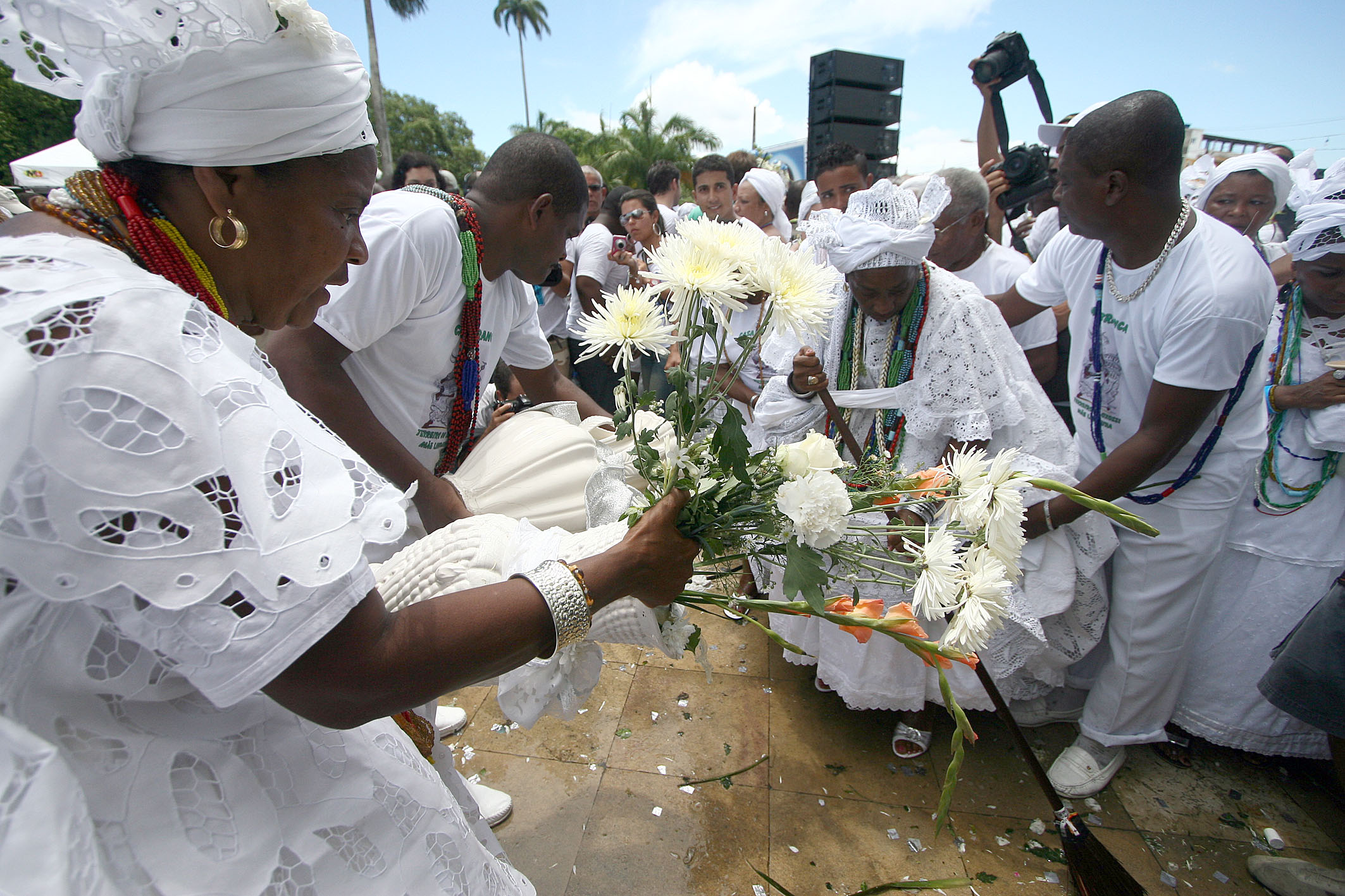
The decisive change was an act of assembly. In Yorubaland a cult belonged to a town and a lineage; a person served one orisa, perhaps two, and the god of the next town was somebody else's. In Salvador there were no towns to belong to. A Nagô freedwoman in the 1830s might be from Oyo, her neighbour from Ketu, her fellow initiate from Egba or Ijesa, and their gods had never shared a shrine. The Bahian houses put them in one. Reis and Mamigonian state it exactly: "Just as Catholic churches venerated several saints under the same roof, the Nagô Candomblé inaugurated a tradition of gathering Orisas from different regions and ethnic groups in Yorubaland under the same ceiling" 13. In a single terreiro Xangô of Oyo, Oxóssi of Ketu, Oxum of Osogbo, Iemanjá of the Egba, Ogum, Oxalá and Omolu each received a shrine (assentamento), a calendar of festivals, and initiates.
Parés adds a qualification that matters for whose invention this was. Gathering several deities in one temple had a clear model in the Gbe vodun cults, at least from the eighteenth century, so that it "would not be only a local 'invention'" of the Nagô 4. The Jeje had built Bahia's first conventual temples; the Nagô took the form and filled it with orisa. The result was a new religious institution with no exact precedent on either side of the ocean:
- A house (terreiro, ilê) holding a pantheon, rather than a shrine holding a god.
- A single ritual order, the xirê, in which the orisa are sung in a fixed sequence, opening with Exu.
- Initiation (feitura) in seclusion, after which the initiate (iaô) belongs to an orisa and to a house, with a ritual family of mothers, fathers and siblings in saint.
- A nation (nação) — Ketu, Jeje, Angola — as the unit of liturgy and of legitimacy, replacing the African town.
- A Yoruba ritual language preserved in song and invocation long after it ceased to be spoken in daily life.
Saints and orisa
The second change was the relation with the Catholic saints. The usual image, of African gods hidden behind saints to deceive masters, owes more to the twentieth century than to the nineteenth. The first ethnographer of Candomblé, the Bahian physician Raimundo Nina Rodrigues, observed in the 1890s that Bahian Africans "conceive their saints or orisás and the Catholic saints as an equal category, though perfectly distinct" 16. He described a mother of a terreiro devoted at once to Nossa Senhora da Conceição and to Ogum, who broke off a festival for Obatalá on Christmas night to go to midnight Mass 16, and he recorded the Thursday washing of the church of Bonfim, Oxalá's church, by Candomblé women 16. His conclusion, quoted by Vanda Serafim, was that the Catholic saints and even the invocations of the Son of God were, for the Bahian Africans, "outras tantos orisás" — so many more orisa 17. To continue to affirm that the Bahian Africans were Catholic, he wrote, "é portanto, alimentar uma illusão": was to feed an illusion 17.
The pairings themselves varied from house to house: Oxalá with the Senhor do Bonfim, Iemanjá or Oxum with forms of the Virgin, Ogum with Saint Anthony or Saint George, Omolu with Saint Lazarus 16. The correspondence was not a disguise but a double membership. Most Candomblé initiates were baptised Catholics, belonged to brotherhoods and buried their dead from the church. Nina Rodrigues himself wrote within the racial science of his day, treating the Africans he studied as an inferior race whose "fetishism" could not rise to monotheism; the record cites him as an observer, not as an authority 16.
A house of women
The third change was in who held authority. In Oyo the Iya Naso was one palace office among many, within a cult system in which male priests, the king's officials and the babalawo diviners held most public religious power. In Bahia the great Ketu houses were founded and led by women: Iyá Nassô, Marcelina Obatossi, Maria Júlia de Figueiredo at the Casa Branca; Maria Júlia da Conceição Nazaré and her successors at the Gantois; Mãe Aninha at the Opô Afonjá. The American anthropologist Ruth Landes, who worked in Salvador in 1938–39, called her book on Candomblé The City of Women (1947) and described the Ketu houses as a matriarchy 18. The phrase overstated it — the Jeje and Angola houses, and many later Ketu ones, were led by men, and men held essential ritual offices in all of them — but the leadership of the founding Nagô houses by freed African women is documented fact 5.
What the transmission displaced
The Bahian synthesis kept a great deal of Yoruba religion and left a great deal behind. Displaced or reduced in the crossing were:
- The town as the unit of worship. Cults whose meaning came from a particular river, hill or royal lineage were detached from it. Oxóssi, the hunter of Ketu's kings, became the patron of a nation in Salvador 8.
- The king. The Sango cult of Oyo was a state cult that legitimised the Alaafin; in Bahia there was no Alaafin, and Xangô's royal symbolism attached to the houses and their mothers instead 7.
- The primacy of Ifa. Babalawo were few in nineteenth-century Bahia and their line nearly died out; divination passed largely to the cowrie-shell oracle (jogo de búzios) cast by the house's mother or father 19.
- Egungun and Ogboni. The ancestral masquerade survived only in a few houses on the island of Itaparica; the earth society that checked Yoruba kings did not cross as an institution.
- Calundu. The itinerant healer gave way to the conventual house; the Central African practices of Bahia were folded into the "Angola" nation under a ritual order increasingly set by the Nagô 4.
Nagô purity: who built the African origin
The last change came after abolition, and it concerned not ritual but prestige. By the early twentieth century the Ketu houses of Salvador were presented, by their leaders and by the intellectuals who studied them, as the purest survival of African religion in the Americas, and the Angola and caboclo houses as mixed and degenerate. Three scholars have taken that hierarchy apart:
- Beatriz Góis Dantas, Vovó Nagô e Papai Branco (1988), showed from Laranjeiras in Sergipe that "Nagô purity" was a local claim negotiated with white patrons and intellectuals, and that it meant different things in different places 20.
- Stefania Capone, La quête de l'Afrique dans le candomblé (1999), argued that the appeal to Africa was a strategy of legitimacy within the religious field, and used the changing treatment of Exu to show it 21.
- J. Lorand Matory, Black Atlantic Religion (2005), traced the ideology of Yoruba purity to the 1890s Lagos of the Yoruba cultural renaissance, where returnees defended Yoruba civilisation against British racism, and to Bahians such as Martiniano Eliseu do Bonfim (1859–1943), who studied in Lagos and brought the Lagosian model back 19.
Parés, writing of the "survivals" school of Herskovits, Bastide and Verger, put it most sharply: that interpretation, "also assumed by the 'traditionalist' sector of Candomblé's practitioners, has reinforced the ideology of the ethnic and ritual 'purity' of this institution and, legitimated by historical 'myths', sustains an idea of tradition as invariable repetition" 4. None of this makes Candomblé less African. It makes it a nineteenth-century Bahian creation out of African materials, made by people who had lost the places those materials came from, and later claimed as pure by people who needed that claim to survive.
The long afterlife
The circuit that had carried captives west also carried people east, and that return traffic fed the religion for a century. Freed Africans who left Bahia after 1835 settled in Ouidah, Porto-Novo, Agoué and Lagos, where their descendants, known as Agudás or "Brazilians", built Brazilian-style houses and churches and kept up trade with Salvador; Verger documented the families and the ships that linked the two shores well into the nineteenth century 2. Bahians sailed to Lagos to trade, to study, and to be initiated, and came back with cloth, kola, black soap and authority 19. When Mãe Aninha, on the advice of Martiniano do Bonfim, instituted a body of twelve "ministers of Xangô" (obás de Xangô) at the Opô Afonjá in the 1930s, she was building a Bahian institution out of a Lagosian reading of Oyo's court, a century after Oyo-Ile had been abandoned 19.
From the twentieth century the religion moved with Bahian migrants to Rio de Janeiro and São Paulo, crossed into Uruguay and Argentina, and drew white and middle-class initiates as well as Black Bahians. Writers, painters and scholars — Jorge Amado, Carybé, Pierre Verger, who was himself initiated as a babalawo in Dahomey under the name Fatumbi — made Candomblé part of the official image of Bahia, which the state's tourist industry adopted in turn 21. Capone describes the resulting religious field as one in which houses compete for legitimacy by claiming the closest connection to Africa, and in which some initiates now travel to Nigeria to "re-Africanise" rituals that their own grandmothers had made in Salvador 21. The direction of the original transmission has, in that sense, partly reversed: Yoruba-speaking Nigeria is now visited by Brazilians in search of a purity that the Bahian houses themselves had invented.
What the cost was
The transmission of orisa worship to Bahia has no peaceful version. Every person who carried it across the Atlantic was carried as property, and the religion that resulted was persecuted by the Brazilian state for most of the century and a half after its foundation. The cost runs in four layers: the trade that delivered its founders, the reprisal that followed 1835, the slavery inside the African community itself, and the long criminalisation of the religion.
The crossing
The numbers come first because they are the largest. Of the 1,347,121 Africans embarked for Bahia between 1514 and 1866 in the Trans-Atlantic Slave Trade Database's estimates, 1,213,691 landed: some 133,000 died at sea, roughly one in ten 1. Eltis's 968,000 Yoruba-speaking departures were mostly people taken in the wars of Oyo's collapse, and on his figures two-thirds of them left between 1776 and 1850 11. Each figure begins with a raid. At Iwoye in 1789, the 2,000 captives of a single Dahomean attack included the child who became the founder of the Alaketu 8. About 76,000 Africans were landed in Bahia between 1830 and 1850 in defiance of Brazil's own law, which declared every one of them free 5.
The war that produced these captives also destroyed the institutions the religion came from. Oyo-Ile, the capital whose palace held the Iya Naso's shrine to Sango, was abandoned in the mid-1830s 10. The office that gave the Casa Branca its name ended in its own city in the same decade that a woman bearing it was deported from Salvador.
1835: the reprisal
The Malê revolt was led by Muslims and was crushed in a night, but its punishment fell on every African in Salvador. Nearly 70 rebels were killed in the fighting, and more than 500 were sentenced to death, prison, the lash or deportation 14. The court records summarised by the Bahian Court of Justice give the outline 22:
- 289 defendants were tried.
- Four men were shot on 14 May 1835: Jorge da Cruz Barbosa (Ajahi), Pedro, Gonçalo and Joaquim.
- Pacífico Licutan, a Muslim teacher, was spared death and sentenced to 1,000 lashes.
- Narciso died while receiving a sentence of 1,200 lashes.
- Provincial Law no. 9 of 13 May 1835 authorised the expulsion of freed Africans and imposed a special tax on those who stayed; about 700 passports for Africa were issued, and the first 200 deportees sailed for Ouidah on the Maria Damiana in November 1835 22.
Castillo and Parés, summarising Reis, call the years that followed "a time of vulnerability, persecution and even terror for the African community, above all for the Nagôs"; the mere possession of a paper written in Arabic was treated as proof of participation, and thousands of freed Africans left Bahia 5. Francisca da Silva, Iyá Nassô, was one of them. The religion's founding generation was thinned by the same repression that its founding legend later remembered as a voyage of renewal.
Slavery inside the houses
The founders of Candomblé were not outside the slave society that had brought them; they were inside it, and some of them prospered in it. Marcelina da Silva, Obatossi, the Casa Branca's second mother, owned at least 18 enslaved people over her life, most of them Nagô women, and with her daughter's the family held 21 people between 1844 and 1878 5. Her will, which describes her as "natural da Costa d'África", a native of the African coast, is one of the documents through which Castillo and Parés reconstructed the house's history 5. The record states it plainly because the alternative — a founding generation of pure victims — is another version of the myth of purity, and it is false. Slavery in Brazil lasted until 13 May 1888. Marcelina died three years before it ended.
Divination as crime
After abolition, the Republic made the religion a police matter. The Penal Code of 1890 punished the illegal practice of medicine (art. 156), folk healing (curandeirismo, art. 158) and, in article 157, the practice of "espiritismo, a magia e seus sortilégios", the use of talismans and fortune-telling "para fascinar e subjugar a credulidade pública" — to fascinate and subjugate public credulity 23. They were applied to Candomblé. The persecution had begun before the Republic — Domingos Sodré was arrested at 4:30 in the afternoon of 25 July 1862, aged about seventy, for divination and "witchcraft", released after five days and warned to give up candomblé on pain of deportation 15 — but it was systematised after it.
- 1920s: the police delegate Pedro de Azevedo Gordilho, "Pedrito", raided terreiros in Salvador, arrested priestesses and confiscated sacred objects; some of the seized objects were held in the police's Museu do Crime until the late 1980s. Ângela Lühning's study of the press and police record from 1920 to 1942 documents the campaign and the newspaper agitation that drove it 24.
- 1969: State Law 22.763-A required terreiros to register with, and pay for a licence from, the Delegacia de Jogos e Costumes, the police department for gambling and vice 25.
- 15 January 1976: Governor Roberto Santos's Decree 25.095 freed Afro-Brazilian religious groups from police registration, fees and licensing 25.
For eighty-six years after the Penal Code, in other words, the drums of a Candomblé festival in Bahia required the permission of the vice squad.
Itapuã, 2000
The persecution did not end with the decree; it changed hands. In 1988 Gildásia dos Santos e Santos, Mãe Gilda de Ogum, founded the Ilê Axé Abassá de Ogum in Itapuã, on the beach where illegal slave ships had once unloaded. In 1999 an evangelical newspaper printed her photograph under a headline denouncing "charlatans"; her terreiro was invaded and she was attacked. She died of a heart attack on 21 January 2000 26. Federal Law 11.635 of 27 December 2007 made 21 January Brazil's National Day for Combating Religious Intolerance 23. The Casa Branca, by then, had been listed as national heritage: the IPHAN advisory council approved its protection (process 1067-T-82) on 31 May 1984 and the listing was ratified in 1986, the first terreiro and the first non-Catholic temple recognised as national heritage in Brazil 27.
The bill
| Layer | What was paid | Who paid it |
|---|---|---|
| The trade | c. 1.21 million landed in Bahia; c. 133,000 dead at sea; 968,000 Yoruba-speaking departures overall | Captives of the Yoruba and Dahomean wars 111 |
| The illegal trade | c. 76,000 landed 1830–1850 in breach of the 1831 law | Africans the law declared free 5 |
| 1835 | c. 70 killed; 500+ sentenced; 4 shot; lash sentences up to 1,200; deportations | Nagô and other Africans of Salvador 22 |
| Slavery within | At least 18 people owned by one founding mother | Enslaved Nagô women 5 |
| Criminalisation | 1890–1976: raids, arrests, confiscations, police licensing | Candomblé houses and their leaders 25 |
| Intolerance | Attacks on terreiros; Mãe Gilda's death, 2000 | Practitioners today 26 |
The bill was paid first and overwhelmingly by the captives, and it was paid again by the religion they built, for a century after the trade ended. What they made from it is still standing: the Casa Branca on the Avenida Vasco da Gama, the Gantois, the Opô Afonjá, the Alaketu, and thousands of other houses across Brazil, singing to the gods of towns in Yorubaland in a language that most of their members no longer speak and none of their founders chose to leave.
What followed
-
17891789: a Dahomean army raids Iwoye in the kingdom of Ketu and carries off some 2,000 captives; one of them, Otampê Ojaró, later founds the Alaketu house in Salvador.
-
1817c. 1817: Afonja, commander of Oyo's provincial army, revolts at Ilorin; the wars of Oyo's collapse begin to fill the slave ports of the Bight of Benin with Yoruba-speaking captives.
-
1830Early 1830s: a Xangô candomblé, probably led by Francisca da Silva, Iyá Nassô, operates in the rua do Passo in Salvador, the first archivally attested Nagô house.
-
183524–25 January 1835: the Malê revolt in Salvador; in the repression that follows, four men are shot and more than 500 sentenced, and Iyá Nassô is deported to Africa in 1837.
-
18504 September 1850: the Eusébio de Queirós law ends the Brazilian slave trade, after some 76,000 Africans had been landed illegally in Bahia since 1830.
-
18901890: the Republic's Penal Code criminalises 'espiritismo', magic and folk healing (arts. 156–158), opening eighty-six years of police control over Candomblé.
-
197615 January 1976: Bahia's Decree 25.095 frees Afro-Brazilian religious houses from police registration and licensing.
-
19861984–1986: the Casa Branca do Engenho Velho becomes the first terreiro listed as national heritage in Brazil.
-
200727 December 2007: Law 11.635 makes 21 January, the anniversary of Mãe Gilda de Ogum's death in Itapuã, Brazil's National Day for Combating Religious Intolerance.
Where this lives today
References
- Eltis, David, and David Richardson, dirs. Trans-Atlantic Slave Trade Database (Slave Voyages), Estimates: embarkation and disembarkation totals for Bahia, 1514–1866 (1,347,121 embarked; 1,213,691 disembarked, including Taipu and Porto Seguro). Emory University / Rice University. en
- Verger, Pierre. Flux et reflux de la traite des nègres entre le golfe de Bénin et Bahia de Todos os Santos du XVIIe au XIXe siècle. Paris and The Hague: Mouton, 1968. Portuguese ed.: Fluxo e refluxo do tráfico de escravos entre o golfo do Benin e a Bahia de Todos os Santos. São Paulo: Corrupio, 1987. fr
- Mello e Souza, Laura de. O Diabo e a Terra de Santa Cruz: feitiçaria e religiosidade popular no Brasil colonial. São Paulo: Companhia das Letras, 1986. pt
- Parés, Luis Nicolau. A formação do candomblé: história e ritual da nação jeje na Bahia. 3rd ed. Campinas: Editora da Unicamp, 2018 (1st ed. 2006). English trans.: The Formation of Candomblé: Vodun History and Ritual in Brazil. Trans. Richard Vernon. Chapel Hill: University of North Carolina Press, 2013. pt
- Castillo, Lisa Earl, and Luis Nicolau Parés. "Marcelina da Silva e seu mundo: novos dados para uma historiografia do Candomblé Ketu." Afro-Ásia 36 (2007): 111–151. pt
- Peel, J. D. Y. Religious Encounter and the Making of the Yoruba. Bloomington: Indiana University Press, 2000. en
- Johnson, Samuel. The History of the Yorubas from the Earliest Times to the Beginning of the British Protectorate. Ed. O. Johnson. London: Routledge, 1921 (completed 1897). pp. 34, 64. en primary
- Castillo, Lisa Earl. "O terreiro do Alaketu e seus fundadores: história e genealogia familiar, 1807–1867." Afro-Ásia 43 (2011): 213–259. pt
- Barber, Karin. "How Man Makes God in West Africa: Yoruba Attitudes towards the Orisa." Africa 51, no. 3 (1981): 724–745. en
- Law, Robin. The Oyo Empire, c. 1600–c. 1836: A West African Imperialism in the Era of the Atlantic Slave Trade. Oxford: Clarendon Press, 1977. en
- Eltis, David. "The Diaspora of Yoruba Speakers, 1650–1865: Dimensions and Implications." In Toyin Falola and Matt D. Childs, eds., The Yoruba Diaspora in the Atlantic World, 17–39. Bloomington: Indiana University Press, 2004. pp. 29–32. en
- Law, R. C. C. "The Chronology of the Yoruba Wars of the Early Nineteenth Century: A Reconsideration." Journal of the Historical Society of Nigeria 5, no. 2 (1970): 211–222. en
- Reis, João José, and Beatriz Gallotti Mamigonian. "Nagô and Mina: The Yoruba Diaspora in Brazil." In Toyin Falola and Matt D. Childs, eds., The Yoruba Diaspora in the Atlantic World, 77–110. Bloomington: Indiana University Press, 2004. pp. 80, 99. en
- Reis, João José. Rebelião escrava no Brasil: a história do levante dos malês em 1835. Rev. ed. São Paulo: Companhia das Letras, 2003. English trans.: Slave Rebellion in Brazil: The Muslim Uprising of 1835 in Bahia. Trans. Arthur Brakel. Baltimore: Johns Hopkins University Press, 1993. pt
- Reis, João José. Domingos Sodré, um sacerdote africano: escravidão, liberdade e candomblé na Bahia do século XIX. São Paulo: Companhia das Letras, 2008. English trans.: Divining Slavery and Freedom: The Story of Domingos Sodré, an African Priest in Nineteenth-Century Brazil. Cambridge: Cambridge University Press, 2015. pt
- Rodrigues, Raimundo Nina. O animismo fetichista dos negros bahianos. Rio de Janeiro: Civilização Brasileira, 1935 (first published in the Revista Brazileira, 1896–1897, and in French, 1900). pp. 168–169, 181–183, 199. pt primary
- Serafim, Vanda Fortuna. "A 'ilusão da catequese': Nina Rodrigues e o catolicismo dos negros baianos." História: Debates e Tendências 14, no. 1 (2014): 195–209. pt
- Landes, Ruth. The City of Women. New York: Macmillan, 1947. Fieldwork in Salvador, 1938–1939. en primary
- Matory, J. Lorand. Black Atlantic Religion: Tradition, Transnationalism, and Matriarchy in the Afro-Brazilian Candomblé. Princeton: Princeton University Press, 2005. en
- Dantas, Beatriz Góis. Vovó Nagô e Papai Branco: usos e abusos da África no Brasil. Rio de Janeiro: Graal, 1988. English trans.: Nagô Grandma and White Papa: Candomblé and the Creation of Afro-Brazilian Identity. Chapel Hill: University of North Carolina Press, 2009. pt
- Capone, Stefania. La quête de l'Afrique dans le candomblé: pouvoir et tradition au Brésil. Paris: Karthala, 1999. Portuguese trans.: A busca da África no candomblé: tradição e poder no Brasil. Rio de Janeiro: Pallas, 2004. fr
- Tribunal de Justiça do Estado da Bahia. "O Tribunal da Relação da Bahia e a Revolta dos Malês." Memorial do Poder Judiciário da Bahia (summary of the 1835 trial records). pt
- Brazil. Decreto n.º 847, de 11 de outubro de 1890 (Código Penal dos Estados Unidos do Brasil), arts. 156–158; Lei n.º 11.635, de 27 de dezembro de 2007 (Dia Nacional de Combate à Intolerância Religiosa). pt primary
- Lühning, Ângela. "'Acabe com este santo, Pedrito vem aí…': mito e realidade da perseguição policial ao candomblé baiano entre 1920 e 1942." Revista USP 28 (1995–1996). pt
- Ramos, Cleidiana. "Reportagens mostram como são recentes as ações respeitosas do Estado em direção ao candomblé." A Tarde (Salvador), 9 October 2021; quoting A Tarde, 16 January 1976, p. 3, on State Decree 25.095 of 15 January 1976. pt
- Câmara dos Deputados, Comissão de Direitos Humanos e Minorias. "Dia Nacional de Combate à Intolerância Religiosa" (on Mãe Gilda de Ogum and Law 11.635/2007). pt
- Instituto do Patrimônio Histórico e Artístico Nacional (IPHAN). Terreiro da Casa Branca (Ilê Axé Iyá Nassô Oká), Salvador: processo de tombamento n.º 1067-T-82; approved by the Conselho Consultivo, 31 May 1984; ratified 1986. pt primary